

There’s something oddly emotional about holding a Pokémon card between your fingers. It’s just cardboard, yeah, but also not just cardboard. It’s childhood. It’s that first shiny pull.
It’s the way your heart did a small backflip when Pikachu stared back at you like he knew something you didn’t. I still remember sitting cross-legged on the carpet, arguing about hit points like it was a matter of international policy.
And somehow, through all the evolutions and eras and reboots, one quiet constant has held the whole universe together: the size of the card itself.
This guide is about Pokémon Card Sizes, but not in a dry, ruler-on-the-table kinda way. We’re going to talk millimeters and inches, sure. But also why it matters.
Why a half millimeter can mean the difference between safe storage and slow heartbreak. Why thickness tells stories. Why the dimensions haven’t changed since the mid-90s and probably won’t anytime soon. So grab a card, any card, and let’s look at it properly.
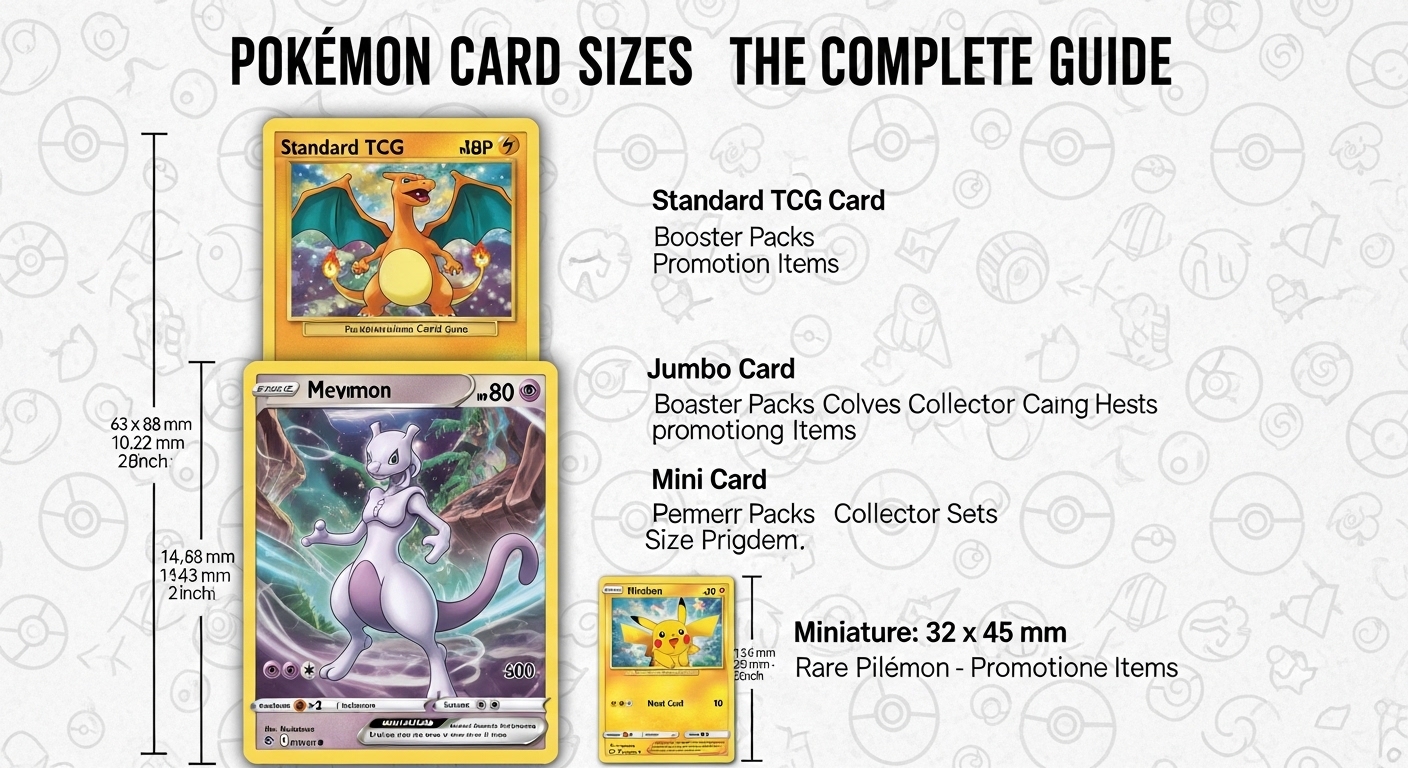
Pokémon Card Sizes Quick Reference Table
| Card Type | Dimensions (Inches) | Dimensions (Millimeters) | Notes / Usage |
|---|---|---|---|
| Standard Pokémon Card Dimensions | 2.5 × 3.5 inches | 63.5 × 88.9 mm | Official size for the Pokémon Trading Card Game (TCG); matches Standard American card size |
| Japanese Card Dimensions | 2.36 × 3.39 inches | 59.9 × 86.1 mm | Slightly smaller than international cards |
| Mini Pokémon Cards | 1.75 × 2.5 inches | 4.4 × 6.3 cm | About 70% of standard size; special releases |
| Jumbo Pokémon Cards | 3.5 × 5 inches | 8.9 × 12.7 cm | Common oversized promotional format |
| Large Jumbo Variants | 8 × 11 inches | 20.3 × 27.9 cm | Special display editions |
| Card Thickness | 0.012 inches thickness | 0.3 mm thickness | Standard print thicknes |
Understanding Pokémon Card Sizes and Standardization
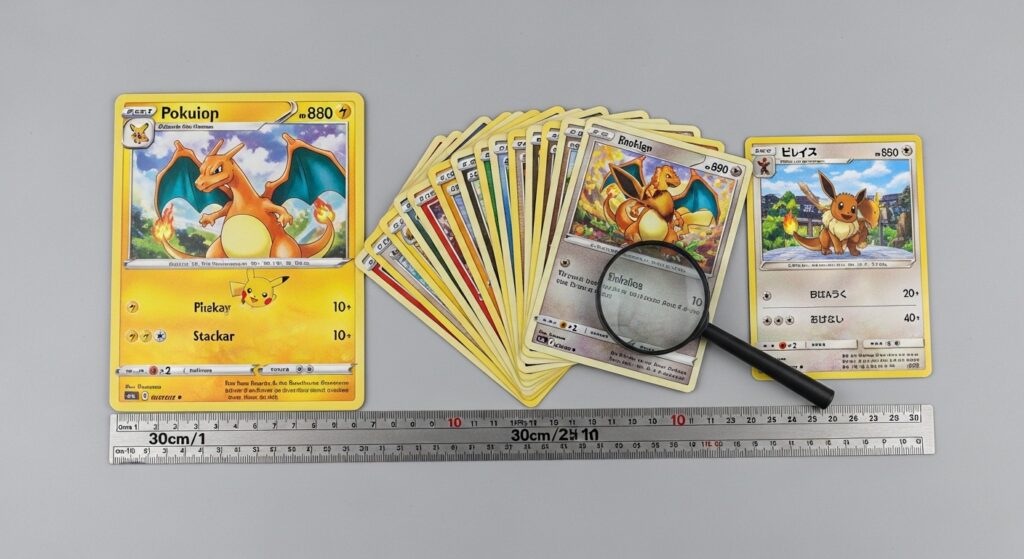
The backbone of the Pokémon Trading Card Game (TCG) has always been consistency. Since its early days under The Pokémon Company, the cards have followed a uniform format.
That’s not accidental, it’s strategic. Uniform dimensions mean global compatibility, predictable gameplay, and seamless storage solutions.
The official Standard Pokémon Card Dimensions are 2.5 × 3.5 inches, which translates to 63.5 × 88.9 mm. If that sounds familiar, it should.
That’s the Standard American card size, the same format used across many trading card systems. These Trading card measurements have remained largely unchanged since 1996, and that stability is honestly kinda beautiful in a chaotic world.
Thickness matters too. Standard cards measure approximately 0.012 inches thickness, or about 0.3 mm thickness. It feels thin, but there’s science in that thinness.
The Cardstock material is engineered for flexibility during shuffling, yet rigid enough to prevent bending under normal play. Core stability is built into the layers, especially with improved cardstock technology introduced during later print runs.
Uniform dimensions since 1996 also ensure interchangeable protection products. You can buy sleeves today that fit a card printed decades ago. That continuity supports cross-game compatibility and long-term collecting. It’s almost like the cards themselves trust the future, which is a strange thing to say but feels right somehow.
And yes, there are tiny differences over the years. Printing specifications evolved. Textured surfaces appeared. Full-art cards changed the way artwork display interacts with card layout design. But the physical frame? Steady as ever.
Pokémon Card Dimensions Compared to Other TCGs
Here’s where things get interesting, and slightly nerdy in a good way. Pokémon cards share dimensions with several other major trading card games. For example, Magic: The Gathering uses the same 2.5 × 3.5-inch format.
So does Yu-Gi-Oh!, though here’s the twist: Yu-Gi-Oh! cards are slightly narrower in Japanese markets. Meanwhile, Cardfight!! Vanguard also aligns closely with standard sizing in international releases.
Shared dimensions across TCGs allow players to use similar storage accessories, though corner radius difference can still vary subtly between brands. That rounded edge curvature isn’t just aesthetic; it affects shuffling durability and wear patterns over time.
Now, let’s talk Japanese Card Dimensions. Japanese Pokémon cards measure 2.36 × 3.39 inches, or 59.9 × 86.1 mm. Slightly smaller.
Not drastically, but enough that you’ll notice if you try to slip one into the wrong sleeve. Japanese vs international size standards create minor friction for collectors who cross borders, which many of us do.
These manufacturing deviations aren’t mistakes; they’re regional printing specifications. The gameplay remains identical, but the physical experience shifts just a touch. And collectors notice everything. Trust me, they do.
Jumbo Pokémon Cards: When Bigger Is Better
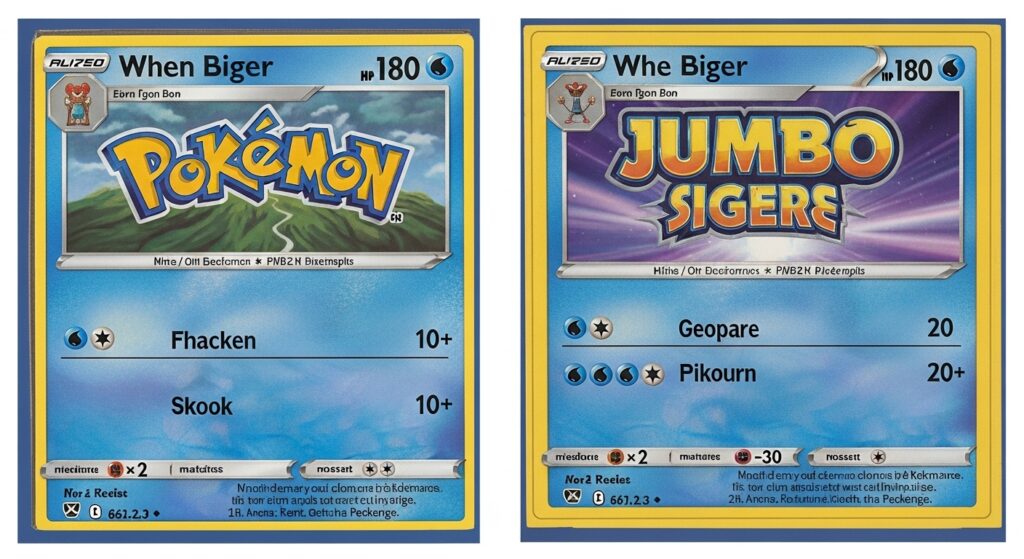
Then there are Jumbo Pokémon Cards, which feel less like playing tools and more like display art. These oversized promotional cards often measure 3.5 × 5 inches, though some larger variants approach 8 × 11 inches or even 20.3 × 27.9 cm. In metric terms, that 3.5 × 5 format translates roughly to 8.9 × 12.7 cm.
These are typically Oversized promotional cards, not meant for tournament preparation or deck formation. They’re statement pieces. Anniversary releases, collector box bonuses, limited edition prints. You don’t shuffle these unless you’re feeling chaotic.
Because of their dimensions, standard sleeves won’t work. You’ll need Oversized sleeves (4 × 6 inches) or custom frames designed specifically for display storage. Some collectors even use Specialty holders or wall-mounted display cases to prevent dust accumulation and humidity warping.
They’re not practical for gameplay, but they’re powerful for nostalgia. I’ve seen grown adults get misty over a jumbo Charizard. It happens. No judgement here.
Mini Pokémon Cards: Pocket-Sized Wonders
On the opposite end, we have Mini Pokémon Cards. These charming little pieces measure approximately 1.75 × 2.5 inches, or 4.4 × 6.3 cm. That’s about 70% of standard size, making them distinctly smaller but still detailed.
Mini versions often appear in special collections or promotional sets. They’re adorable, honestly. But storing them requires careful thought. Standard sleeves are too big, and without proper Card storage solutions, they can slide around and suffer edge wear.
Collectors who focus on Pokémon card collecting across formats often invest in custom binder inserts or mini-compatible sleeves. It’s a niche within a niche, but that’s kinda the magic of this hobby.
Card Protection & Storage: Why Size Precision Matters
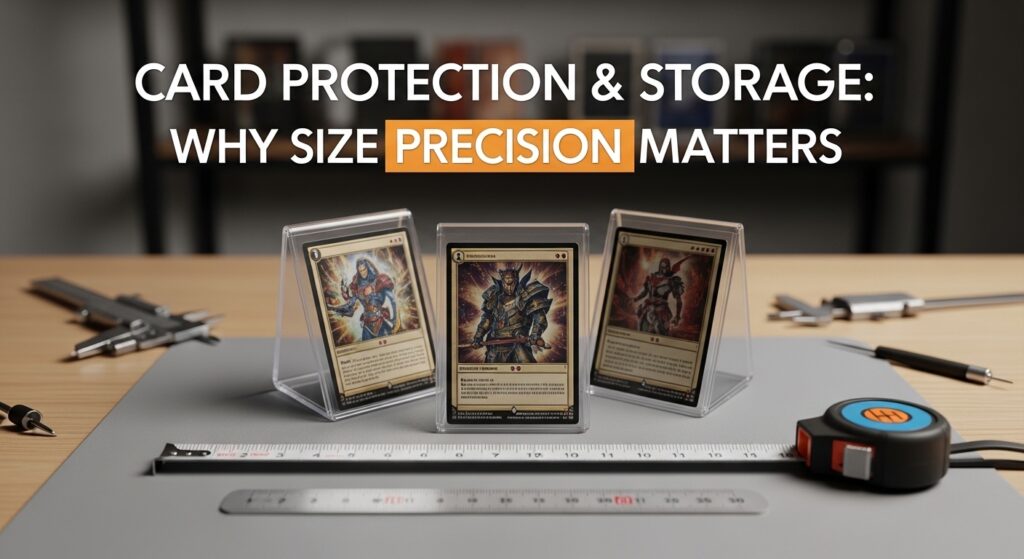
This is where measurements stop being trivia and start being protection. If you care about card preservation, precision is everything.
Standard Pokémon cards fit best in Standard sleeves (2.625 × 3.625 inches). These provide room for easy insertion without bending corners.
For tighter protection, many collectors use Perfect Fit sleeves (2.52 × 3.54 inches) as an Inner sleeve, followed by a looser Outer sleeve in a practice known as Double-sleeving.
For higher-value cards, Top loaders (2.625 × 3.75 inches) offer rigid defense. Alternatively, Card saver semi-rigid holders (2.75 × 3.875 inches) are commonly used during the Card grading process because they allow easy submission without risking corner damage. These Semi-rigid holders are favored by professional graders for shipping safety.
Binders matter too. A standard 9-pocket binder pages layout accommodates regular cards perfectly. But make sure the pockets are PVC-free to prevent chemical damage over time.
Moisture protection and dust prevention are not optional if you’re serious about value preservation. Humidity warping can subtly bend cards, altering surface reflection and potentially affecting grading outcomes. Display storage should always avoid direct sunlight, which can fade holographic finish layers over time.
It’s amazing how much science goes into protecting what looks like simple cardboard.
Thickness, Authenticity, and Counterfeit Detection
Card thickness consistency is a major tool in counterfeit identification. Authentic Pokémon cards maintain the previously mentioned 0.3 mm range. Fake cards often deviate slightly, either too thin or oddly rigid.
Serious collectors use calipers measurement tools to verify dimensions. During card authentication, professional graders examine core stability, light diffusion through the cardstock, and edge layering patterns.
Printing technology evolution over the decades has improved durability. The EX era (2003–2007) introduced refinements in gloss coating. Later full-art and textured surfaces required adjusted manufacturing processes to maintain thickness consistency.
If you’re concerned about counterfeit detection, compare suspect cards to verified authentic ones from trusted sets like the early Base Set (1996–1999). Look at energy symbols, attack descriptions, and font alignment. Manufacturing deviations often reveal themselves in small, almost invisible ways.
It’s detective work, really. And sometimes it feels like you’re solving a mystery with a magnifying glass and too much coffee.
Special Eras and Dimensional Consistency
Despite stylistic shifts across the e-Card series, Ultra Rare releases, Secret Rare prints, and various Promotional Pokémon cards, the base dimensions remained stable. Even Legendary Pokémon collections followed standard sizing.
Japanese Carddass vending machines produced cards before the TCG fully standardized, and those sometimes varied more noticeably. But once the official game format locked in, it stayed locked.
That consistency allowed global tournament preparation to flourish. Players could build decks anywhere in the world, confident their sleeves and binder systems would work. Deck formation depends on predictability, and predictability depends on size.
It’s funny, but sometimes I think the physical dimensions are what made the global community possible. If everyone’s cards fit the same sleeves, everyone’s playing the same game.
Read this blog : https://wittyeche.com/is-9-inches-big/
Why Size Still Matters Today
Modern releases continue to honor original measurements, even as artwork display becomes more ambitious. Full-art cards stretch illustrations to the edges. Holographic finish techniques have grown more intricate. Textured surfaces add depth you can literally feel.
Yet the outer borders? Identical.
That commitment ensures cross-game compatibility and protects decades of accumulated Card protection products. Collectors don’t need to reinvent storage every generation. That’s trust built over time.
And if you’re serious about Card grading, maintaining pristine edges and corners through proper storage directly impacts resale value. Professional graders evaluate centering, surface, edges, and corners with microscopic precision. A card stored loosely in a drawer will not age gracefully. I promise.
Practical Advice for Collectors
If you’re just starting out, measure twice before buying supplies. Not all sleeves are created equal, and mixing Japanese and international cards without checking dimensions can lead to frustration.
Invest in quality binder pages. Avoid overstuffing pockets. Store high-value cards in top loaders or semi-rigid holders. Keep collections in a cool, dry place to prevent humidity warping.
And if you collect jumbo or mini formats, label storage clearly. It sounds basic, but future-you will appreciate the organization.
Frequently Asked Questions
pokemon cards size
Standard Pokémon cards measure 2.5 × 3.5 inches (63.5 × 88.9 mm), which follows the standard American trading card size used worldwide.
dimension of pokemon card
The dimension of a Pokémon card is 2.5 inches wide and 3.5 inches tall, with an approximate thickness of 0.3 mm (0.012 inches).
whats the size of a pokemon card
A Pokémon card is 2.5 by 3.5 inches, making it compact enough for gameplay while still large enough to clearly display artwork and text.
pokemon tcg card size
Pokémon Trading Card Game cards use the standard size of 2.5 × 3.5 inches (63.5 × 88.9 mm) for consistent play and compatibility with sleeves.
pokemon trading card size
The standard Pokémon trading card size is 2.5 × 3.5 inches, ensuring compatibility with most trading card sleeves, binders, and top loaders.
Conclusion: The Quiet Power of Precision
At first glance, Pokémon Card Sizes might seem like a minor detail in a universe filled with dragons, lightning mice, and cosmic battles. But look closer. Size is structure. Structure is longevity. Longevity is legacy.
From 2.5 × 3.5 inches rectangles to oversized display pieces, from carefully engineered Card thickness to precisely measured sleeves, every millimeter supports a global culture of collecting, trading, and battling.
So next time you hold a card, pause for a second. Feel the edges. Notice the balance. Appreciate the fact that something so small can be so carefully standardized, so intentionally designed, so quietly enduring.
And if you’ve got a favorite memory tied to a particular card size maybe your first jumbo pull, or the moment you learned about double-sleeving the hard way share it. The beauty of this hobby isn’t just in the cards. It’s in the stories we attach to them.
Because sometimes, the difference between ordinary cardboard and treasured artifact is exactly 63.5 × 88.9 mm wide. And that’s kinda wonderful, isn’t it.