

There’s this moment, usually late at night, when the house finally quiets down and the dishwasher hums like it knows a secret. You sit with a cup of tea you forgot you poured, scrolling, thinking about your kid.
Their math homework is half done again. Reading feels like pulling teeth. And suddenly, there it is in your search bar: How much does Kumon cost.
Not because you love spending money, but because you love that small human more than your own comfort, probably. That’s how most people land here, not with a spreadsheet, but with a feeling. Hope mixed with worry, and a tiny bit of panic, honestly.
This article isn’t going to talk at you like a brochure. It’s more like sitting on the bleachers with other parents, swapping stories, numbers, and small regrets.
We’ll talk real Kumon cost, the bits they print big and the parts whispered in waiting rooms. We’ll wander through alternatives like Brighterly, peek at Trustpilot stars, and yes, even mention what people grumble about on Reddit. No perfection here, just clarity, or at least more of it than before.
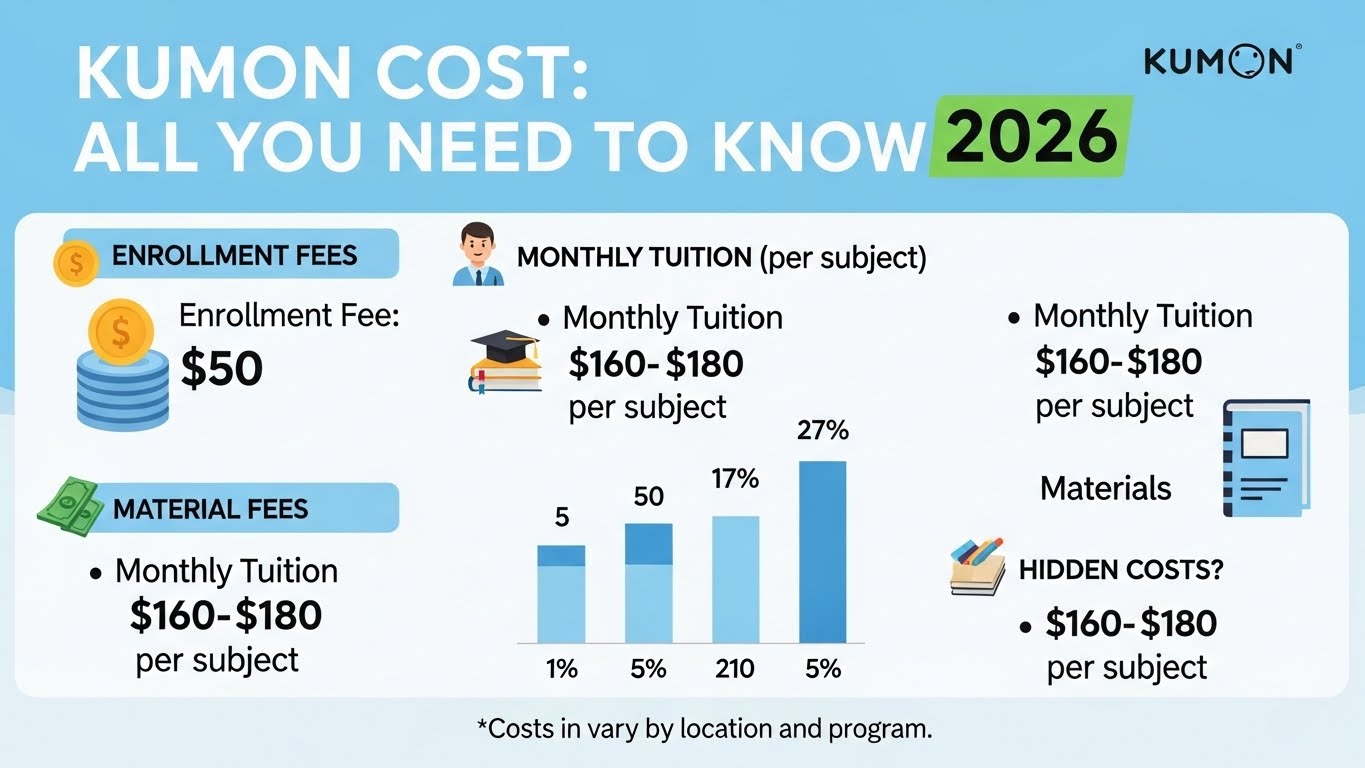
Kumon Cost Overview 2026 (Quick Table)
| Cost Item | What It Covers | Typical Price Range (USD) |
|---|---|---|
| Kumon Enrollment Fee | One-time registration + placement test | $50 – $75 (one time) |
| Kumon Math Program (Monthly) | Worksheets, center support, assessments | $150 – $200 per month |
| Kumon Reading Program (Monthly) | Reading worksheets, progress tracking | $150 – $200 per month |
| Both Subjects (Monthly) | Math + Reading combined | $300 – $400 per month |
| Kumon Cost Per Year | 12 months, one subject | $1,800 – $2,400 |
| Kumon Cost Per Year (2 Subjects) | Math + Reading yearly | $3,600 – $4,800 |
| Kumon Material Fees | Worksheets & materials | Usually included |
| Kumon Cost Per Hour (Estimated) | Based on weekly sessions + homework | $20 – $30 per hour |
| Online vs Offline Cost | Pricing difference | Mostly the same |
| Discounts | Siblings / seasonal | Center-dependent |
Understanding the Kumon Cost Structure (Without the Sugarcoating)
The first thing to know is that Kumon pricing plans aren’t universal, even though the worksheets kinda are. The Kumon cost structure depends on where you live, who runs the center, and sometimes how confident the instructor feels that day, or so it seems. In the United States, most parents report similar ranges, but with enough variation to make budgeting feel squishy.
Typically, you’re looking at:
- A Kumon enrollment fee or Kumon registration fee, often one-time, hovering somewhere between uncomfortable and mildly annoying.
- Monthly tutoring fees for each subject, meaning math and reading are billed separately, because of course they are.
- Occasional Kumon material fees, which sound small until they stack up like forgotten subscriptions.
Parents in New York often say the monthly fee feels higher, while families in Miami sometimes mention seasonal discounts, though nobody’s quite sure how to unlock them. The Kumon Math Program and Kumon Reading Program usually sit in the same price neighborhood, but not always on the same street.
The idea behind the pricing is tied to independent learning methods and worksheet-based learning, which Kumon believes scales efficiently. Whether that savings gets passed to you, well, that’s debatable depending who you ask.
How Much Does Kumon Cost Per Month, Really?

Let’s stop dancing around it. Most families pay somewhere between what feels “doable with effort” and “hmm, that’s a vacation payment.” The average Kumon price per month per subject tends to land in the low-to-mid hundreds. So if your child is enrolled in both math and reading, double that feeling.
Here’s how parents often describe it, not in clean numbers, but vibes:
- “It’s less than private tutoring, but more than I expected for worksheets.”
- “Feels okay until you realize it’s 12 months a year.”
- “I stopped buying fancy coffee, so that’s my Kumon fund now.”
When you stretch it out, the Kumon cost per year becomes clearer, and heavier. Some families compare it to a used car, others to peace of mind. Neither is wrong. And because Kumon emphasizes repetitive learning and memorization techniques, progress can be slow at first, which makes those monthly fees feel extra loud.
Kumon Cost Per Hour vs Perceived Value
One thing that trips parents up is calculating Kumon cost per hour. Because it’s not traditional tutoring, the math gets fuzzy. Kids attend the Kumon Offline Learning Centers maybe twice a week, but most of the work happens at home, sprawled across the kitchen table.
So parents start doing this mental gymnastics:
- “If my child spends 20 minutes a day on Kumon Worksheets, is that good value?”
- “What am I paying for exactly, time or outcome?”
Kumon is built on independent study skills, not hand-holding. Tutor interaction is limited, which some kids thrive on, others not so much. According to education writer Lawrence C. Ragan, “Programs like Kumon reward consistency more than talent,” which sounds inspiring until your child is crying over fractions again.
Kumon Pricing Transparency and the Hidden Bits
Let’s talk about Kumon pricing transparency, or the lack of it. Many parents say the initial conversation feels vague, like buying a sofa without seeing the legs. You’ll hear phrases like “it depends” and “we’ll assess first,” which is fair, but also frustrating.
Possible extra charges include:
- Placement testing fees, sometimes bundled, sometimes not.
- Late pickup fees, which sneak up on working parents.
- Additional materials for advanced levels.
This is where parent decision-making in education becomes emotional. You’re not just buying a service, you’re buying belief. And belief is expensive. Some parents on Reddit discussions share that they wished they’d asked more questions upfront, especially about long-term costs.
Kumon Cost Structure in 2026: What’s Changed?
By 2026, Kumon has leaned harder into Kumon Online Learning, especially after realizing pajamas are the future. Online options can sometimes be slightly cheaper, but not always. The tradeoff is less structure, more responsibility on the family side.
The Kumon Offline Learning Centers still exist and thrive, especially for elementary school students who need routine like fish need water. But online learning offers learning flexibility, which families juggling sports, therapy, and life really appreciate.
Still, don’t expect a massive price drop. Kumon’s model hasn’t changed drastically, and neither has its confidence in that model.
Kumon vs Brighterly: A Cost Comparison Parents Actually Care About
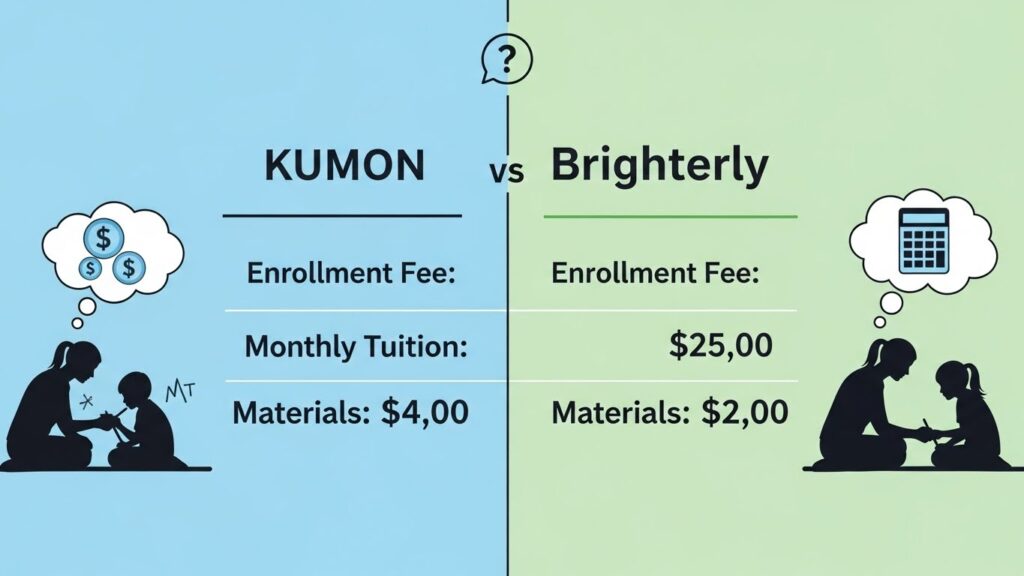
This is where conversations get spicy. Kumon vs Brighterly isn’t just about money, it’s about philosophy. Brighterly Math Tutoring and Brighterly Reading Tutoring focus on 1:1 tutoring sessions, with real humans, in real time, often using game-centered learning and visual worksheets.
Cost-wise:
- Brighterly pricing is often per lesson, making budgeting feel more controllable.
- Parents mention Brighterly cost per lesson feels fair, especially when progress is visible quickly.
- Kumon, on the other hand, is a flat monthly commitment, progress be darned.
Brighterly aligns more with STEM-based curriculum and US Educational Standards, which appeals to parents thinking ahead to SAT prep and beyond. Education consultant Lorraine J. Ramirez Villarin once noted that “Engagement is the currency of modern learning,” and that’s where Brighterly shines, according to many Brighterly reviews.
Affordable Math Tutoring: Is Kumon Budget-Friendly Anymore?
This depends on what “budget-friendly” means in your house. For some, affordable math tutoring means anything under private tutor rates. For others, it means not choosing between tutoring and groceries.
Kumon is often seen as:
- Cost-effective for families with multiple kids, sometimes discounts apply.
- Less ideal for kids needing emotional support or motivation.
- Predictable in cost, unpredictable in emotional toll.
Parents of 1st grade students often feel the price is steep for basics, while parents of middle school students see more value as gaps widen. For homeschooling families, Kumon can act as a supplementary learning program, filling in structure they don’t want to build themselves.
What Reviews Say About Kumon Cost and Value
Scrolling through Kumon reviews on Trustpilot rating pages is a mixed bag of gratitude and grumbling. Five-star reviews praise discipline and independence. One-star reviews often mention burnout and cost frustration.
Common themes include:
- “It works if your child sticks with it.”
- “Too expensive for what feels like homework.”
- “Amazing for building math proficiency, boring as toast though.”
Sandra Garcia, a grandmother who enrolled her grandson, said in a community forum, “I didn’t understand it at first, but now he does his work without being chased. That’s worth something, I guess.” That “something” is hard to price, which makes conversations about cost so slippery.
Online vs Offline Tutoring: Cost Meets Convenience
Choosing between traditional tutoring vs online tutoring isn’t just about price, it’s about sanity. Online options often reduce commute costs and time, which parents rarely factor into spreadsheets but feel deeply in their bones.
Kumon online offers:
- Same worksheets, different format.
- Less peer pressure, more self-discipline required.
- Similar pricing, sometimes slightly adjusted.
Brighterly online offers:
- Flexible schedules.
- Real-time feedback.
- Often a free trial or free placement test, which feels generous in a world of paywalls.
Is Kumon Worth the Cost for Your Family?

There’s no clean answer, and anyone who says there is, hasn’t lived with a child who hates math on Tuesdays but loves it on Thursdays. Kumon works best for kids who respond to routine, repetition, and quiet achievement. It struggles with kids who need encouragement, storytelling, or play.
Parents of 2nd–9th grade learners often see the biggest academic improvement when expectations are clear and support is consistent. If your child is already motivated, Kumon can amplify that. If not, the cost can feel like paying for frustration.
Practical Tips: How to Make the Most of Your Kumon Investment
Before you get started, ask questions like you’re buying a house, not a pencil.
- Ask for a full breakdown of monthly learning fees and potential extra charges.
- Observe a class if possible, even briefly.
- Talk to other parents in the waiting room, they’ll tell you the truth faster than brochures.
To personalize the experience:
- Pair Kumon with encouragement, not pressure.
- Celebrate small wins, like finishing a level, even if it took forever.
- Reassess every six months, not out of guilt, but care.
If you’re unsure, book free lesson options with alternatives. Try now, compare vibes, not just prices. Education isn’t one-size-fits-all, no matter how neat the worksheets look.
read this Blog: https://wittyeche.com/two-inches/
Frequently Asked Questions
kumon prices
Kumon prices usually depend on the learning center and location. Most parents pay between $140 and $250 per month per subject.
kumon cost per month
The monthly cost of Kumon typically ranges from $140 to $250 for one subject, such as math or reading, excluding extra fees.
kumon price
The Kumon price is not fixed and can vary based on your area, chosen subjects, and learning mode (online or in-center).
kumon cost
Kumon cost includes monthly tuition and may also involve registration and material fees, especially during the first month.
how much kumon cost per month
Kumon usually costs around $150 to $170 per month on average, but in some locations, it can go up to $250 per subject.
A Gentle Ending, Because This Is About Kids After All
At the end of the day, Kumon cost isn’t just a number, it’s a story you tell yourself about what matters. Some families swear by it, others quietly move on. Both are okay. What matters is that your child feels supported, seen, and capable, whether through Kumon Online Learning, Brighterly Math Tutoring, or a mix of things cobbled together with love and duct tape.
If you’ve walked this road already, share your experience. Parents learn best from other parents, not marketing copy. And if you’re just starting, take a breath. You’re doing your best, even if the math doesn’t add up yet.