
The first time I ever really thought about Measurement, like really felt it in my chest not just my head, was when a newborn baby girl was placed on a kitchen scale wrapped in a towel that smelled faintly of milk and soap.
Everyone leaned in. Numbers blinked. Someone whispered, “She’s tiny, but strong,” and nobody wrote it down but somehow it counted. That moment, that hush, that shared looking, is what measuring actually is.
It’s not just mathy stuff. It’s noticing. It’s caring enough to compare today with yesterday. And when a baby girl enters the room, suddenly everything becomes a measurement. Her height, her weight, the time between naps, the temperature of the bath water that grandma insists is too cold, again.
This article wanders through the world of measuring in a way that feels human, a bit crooked at the edges, like learning usually is. We’ll talk definitions and scales and units, yes, but also how kids feel measurement before they name it, how parents in different cultures whisper numbers like blessings, and why a simple ruler can feel like a magic wand on the floor of a preschool. Stay with me, it’ll be worth it I think.
| Topic | Key Points |
|---|---|
| Measurement | Comparing a quantity with a standard unit |
| Types | Length, Weight, Time, Temperature, Capacity |
| Units | m, cm, kg, g, s, min, °C, L |
| Systems | Metric, Imperial |
| Scales | Nominal, Ordinal, Interval, Ratio |
| Instruments | Ruler, Scale, Thermometer, Clock |
Definition of Measurement as a first quiet promise

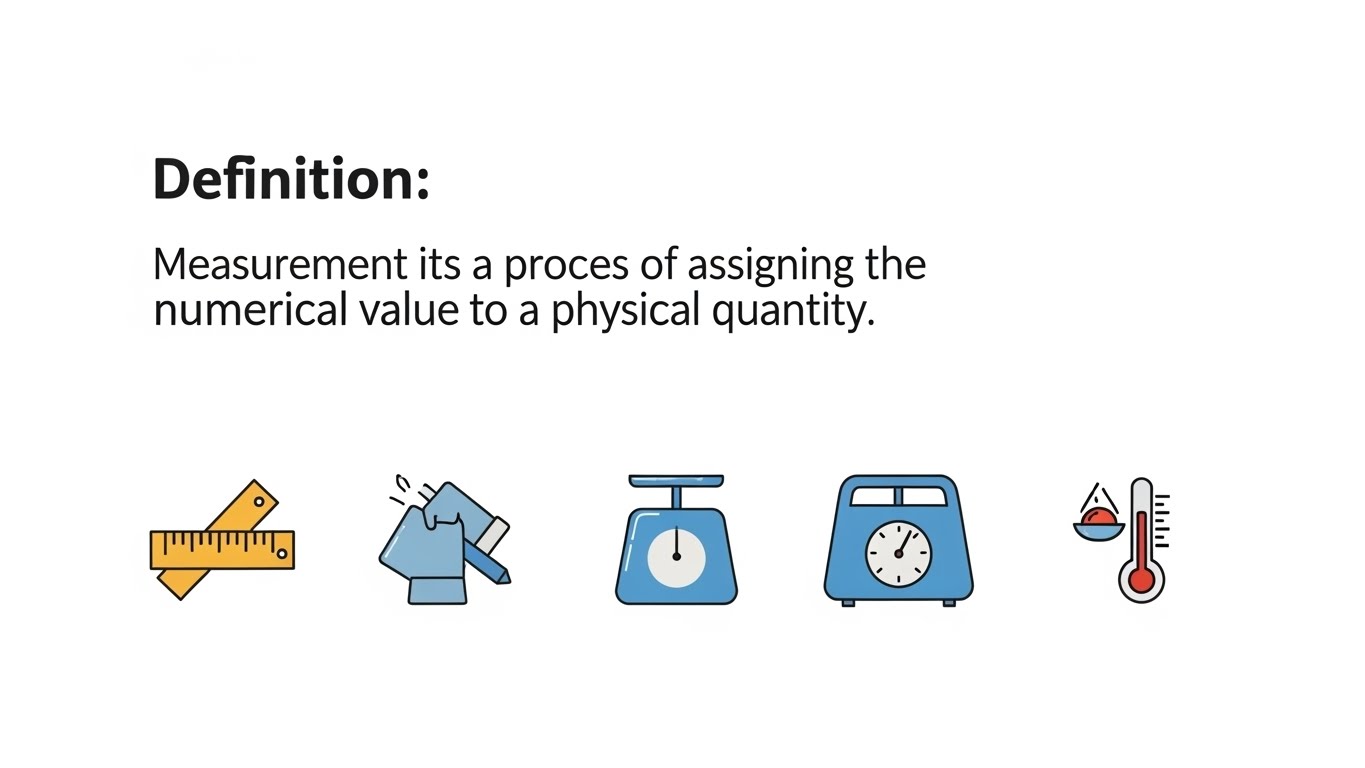
When people ask what is measurement, the textbook answer jumps up fast. But the heart-answer takes its time. The Definition of Measurement is about comparing a physical quantity to a known reference, a standard unit, so we can say “this much” and mean the same thing together. But for kids, and honestly for tired parents too, it starts way softer than that.
Here are some wish-like thoughts, the kind you might say while rocking a baby girl or watching a preschooler stack blocks, that explain measurement without explaining it too hard.
- May you always notice when something is big or small, even before you know the words for it, because noticing is the first math.
- I hope you learn comparison by sharing snacks, seeing who has more apple slices and not fighting too much about it, at least not every time.
- May quantification sneak into your life through giggles, like counting steps to the door when you’re excited.
- I wish you grow up knowing that a non-standard measurement like “three footsteps” still counts, it really does.
- May your measurement vocabulary grow slowly, like a garden, messy but alive.
- I hope you feel safe being wrong when you guess how longer or shorter something is.
- May learning feel like observation, not pressure, because learning through observation sticks better, always has.
- I wish numbers never scare you, they’re just stories wearing uniforms.
- May your early measurement skills be wrapped in play, not worksheets.
In many homes, elders say things like “she’s heavier than my worries” or “as long as my arm,” mixing poetry with math, and it works somehow.
Types of Measurement we meet before we know their names
Long before a child can say “unit” or “scale,” they’re already measuring the world with their whole body. The Types of Measurement show up as sensations first, then as words, and only later as symbols in a notebook that smells like crayons.
Below are wishes shaped like everyday learning moments, especially in early childhood learning spaces like homes and EuroKids Preschools, where teachers swear by messy floors and curious questions.
- May you feel length by stretching your arms wide and saying “this much!” even if it’s not exact at all.
- I hope you learn distance between two points by running from the door to your parent and back, again and again.
- May weight be something you feel in grocery bags, learning heaviness / bulk with both hands.
- I wish you understand time as waiting for cookies to bake, not staring at a clock yet.
- May duration be felt in stories read twice because once wasn’t enough.
- I hope temperature makes sense when you say bath water is too warm or too cool, and adults listen.
- May capacity be learned by spilling juice and cleaning it up together, no shame.
- I wish you notice hotness / coldness in the sun on your face, not just numbers.
- May measuring never be separate from living, because it never really is.
A preschool teacher from the EuroKids Blog once said, “Children measure with their emotions first, tools come later,” and I wrote that down on a sticky note that’s still crooked on my desk.
Units of Measurement as tiny agreements we make together

Units are like social contracts, if you squint a little. We all agree that a meter (m) means the same thing, and suddenly we can build bridges, or at least bookshelves.
For children, Units of Measurement are introduced gently, often alongside stories and songs in mathematics for kids programs. Here are wishes that sneak units into daily life without making them feel heavy.
- May the millimeter (mm) feel like a secret detail you notice when drawing tiny hearts.
- I hope the centimeter (cm) becomes familiar through pencil boxes and bookmarks.
- May the kilometer (km) sound long because road trips feel long, especially in the back seat.
- I wish the inch (in) and foot (ft) feel like old friends from stories and crafts.
- May yard (yd) and mile (mi) show up when elders tell you how far they walked “back in my day.”
- I hope gram (g) and kilogram (kg) appear while cooking, with flour on noses.
- May ounce (oz) and pound (lb) be learned by lifting pumpkins and laughing.
- I wish second, minute, and hour are felt before they’re memorized.
- May liter (l) and milliliter (ml) slosh happily in measuring cups.
In some cultures, parents whisper weights and lengths like charms, believing the saying of it helps the child grow well. Science shrugs, but love nods.
Measurement Systems and how the world politely disagrees
The world couldn’t agree on shoes sizes, so of course it has more than one Measurement Systems. Kids usually don’t care, but educators do, especially when explaining metric vs imperial system without causing headaches. Here’s a set of gently opinionated wishes about systems that coexist, awkwardly but mostly fine.
- May the Metric System feel clean and friendly with its base-10 rhythm.
- I hope you sense why it’s globally used, even if you never say “globally.”
- May mass, length, capacity, temperature all feel connected, not separate subjects.
- I wish the Imperial System sounds like history, because it kind of is.
- May you learn that it was shaped by laws like the Weights and Measures Act (1824), which sounds scarier than it is.
- I hope inches and gallons don’t confuse you too much, they confuse adults too.
- May switching systems feel like switching languages, doable with practice.
- I wish you understand that systems are human-made, not nature-made.
- May curiosity win over frustration when numbers don’t line up neatly.
A grandparent once told me, “We used stones and hands before charts,” and honestly that explains a lot.
Scales of Measurement for sorting thoughts, not just data
When children grow, they start sorting not just toys but ideas. The Scales of Measurement help with data classification and data ranking, though kids don’t call it that while doing it. These wishes speak to the quieter side of scales, the thinking side.
- May the Nominal Scale feel like naming crayons by color, no numbers needed.
- I hope classification labels never feel limiting to you.
- May the Ordinal Scale be learned through lining up shoes from smallest to biggest.
- I wish ranked data feels fair, not judgmental.
- May the Interval Scale sneak in through mood charts and smiley faces.
- I hope you learn that not everything has a true zero, and that’s okay.
- May the Ratio Scale make sense when comparing snack sizes.
- I wish numerical comparison feels like a tool, not a weapon.
- May measurement concepts support thinking, not replace feeling.
In classrooms, teachers often use stories to explain these scales, because stories stick where tables don’t.
Measurement Instruments as friendly tools, not scary ones
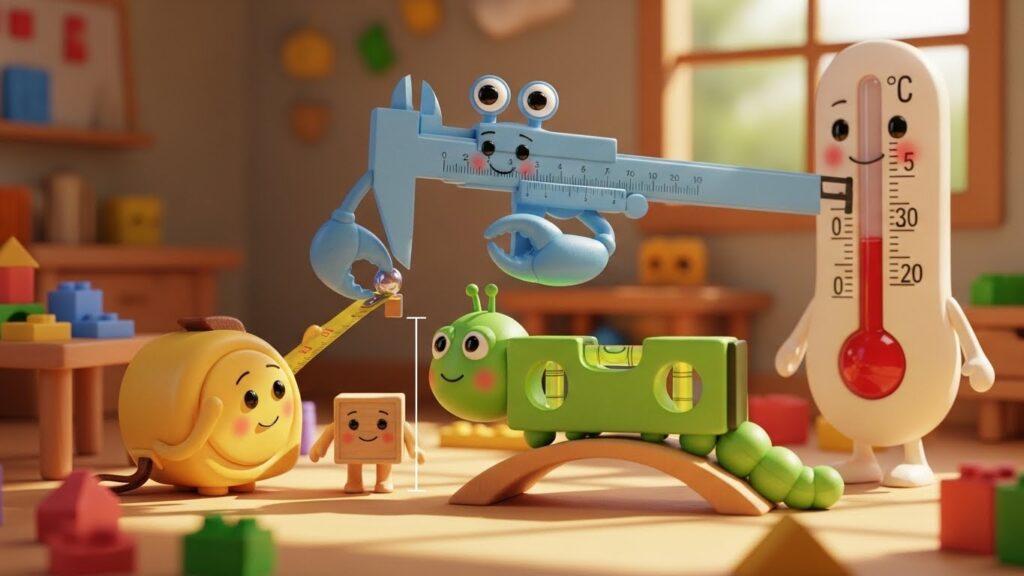
A ruler can feel intimidating if introduced wrong, like it’s there to judge. But as Measurement Instruments, tools can be playful extensions of curiosity. These wishes imagine tools as companions in real-world interaction and cognitive development.
- May the measuring tape feel like a snake you can tame.
- I hope the stadiometer at clinics doesn’t scare you, it’s just curious.
- May the weighing machine never tell you stories about worth.
- I wish the thermometer feels helpful, not alarming.
- May the measuring flask sparkle with science-fair energy.
- I hope clock and pendulum clock tick like lullabies.
- May you notice precision without obsessing over it.
- I wish accuracy feels satisfying, not stressful.
- May digital vs analog be a choice, not a battle.
Teachers at EuroKids Preschools often let kids play with broken tools first, just to remove the fear, which feels very wise somehow.
Measurement for Children and the art of learning without noticing
This section holds the heart of it. Measurement for Children isn’t about pushing concepts early, it’s about letting early math learning bloom through measurement activities that feel like play. These wishes are small nudges toward that philosophy.
- May tall and short be learned through hugs and door frames.
- I hope heavy and light are explored safely, with pillows and books.
- May near and far be felt in games of hide and seek.
- I wish longer and shorter are argued about, respectfully.
- May heavier than and lighter than come up while sharing chores.
- I hope measurement examples come from life, not just charts.
- May units of measurement for children be colorful and touchable.
- I wish preschool math learning feels like discovery.
- May curiosity lead, always.
An educator once said, “If they’re laughing, they’re learning,” and I’ve seen that be true more often than not.
Read this blog: https://wittyeche.com/how-to-long-7-feet/
Frequently Asked Questions
define measurement
Measurement is the process of finding out the size, length, weight, or amount of something using numbers and standard units.
measurement for kids
Measurement for kids means learning how to compare and measure things like height, weight, time, and capacity in an easy and fun way.
types of measurement
The main types of measurement are length, weight, time, temperature, and capacity, which help us measure different things around us.
measurement definition
Measurement is a method used to describe physical quantities such as how long, how heavy, or how hot something is.
what is measurement for kids
Measurement for kids is understanding and using simple tools like rulers, clocks, and scales to measure everyday objects.
A closing thought, measured gently
As we wrap this long, winding walk through definitions and units and tiny socks on scales, remember this: measurement is a love language in disguise. It’s how we say, “I see you,” whether we’re noting a baby girl’s first growth spurt or a child’s growing confidence with numbers. If you’re writing a message, teaching a lesson, or just noticing the world with a young human beside you, make it personal. Use their name. Reference yesterday. Turn numbers into narratives.
You could write wishes on a growth chart, sing units into bedtime songs, or leave chalk measurements on sidewalks. However you do it, keep it human. If you have a favorite memory about learning to measure, or teaching someone else, share it. Stories, like numbers, grow when shared.