

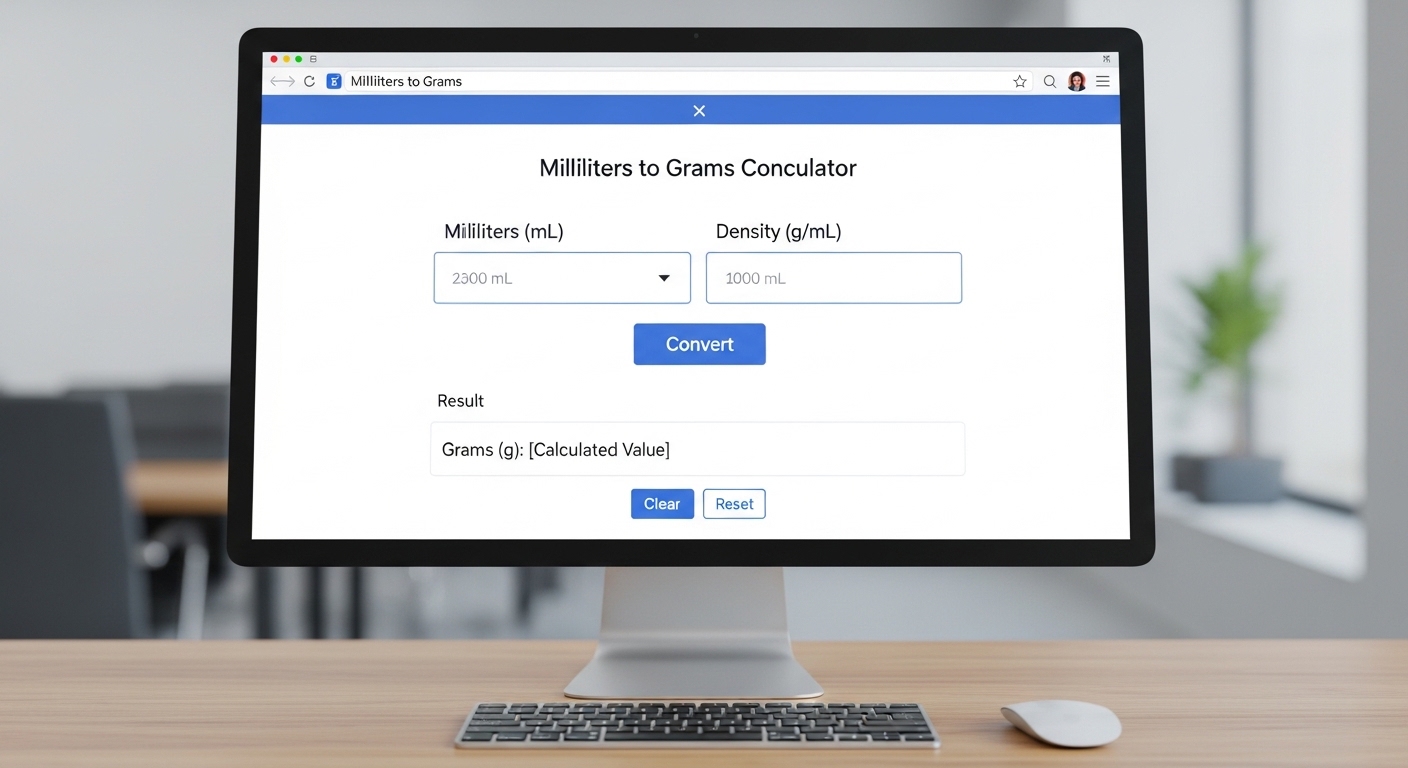
Sometimes I sit in my kitchen, staring at a measuring cup and wonder… why does 250 mL of milk not feel like the same as 250 mL of flour? It’s not just me, right? This tiny conundrum milliliters versus grams has tripped up more bakers, chemists, and curious minds than you might imagine.
Welcome to the strange, sometimes magical world of Milliliters to Grams Conversion, where volume and mass units collide, dance, and occasionally just frustrate the heck outta us.
If you’ve ever asked yourself, “How many grams is this in mL?” you’re in the right place, and we’ll unpack it all, in a way that feels less like a textbook and more like a conversation with that slightly nerdy, slightly obsessive friend who knows way too much about density.
| Ingredient | Density (g/mL) | 1 mL → grams |
|---|---|---|
| Water | 1.00 | 1 g |
| Milk | 1.03 | 1.03 g |
| Cooking Oil | 0.92 | 0.92 g |
| All-Purpose Flour | 0.55 | 0.55 g |
| Granulated Sugar | 0.85 | 0.85 g |
| Honey | 1.42 | 1.42 g |
| Butter (melted) | 0.91 | 0.91 g |
Understanding the Basics: Volume vs. Mass Units
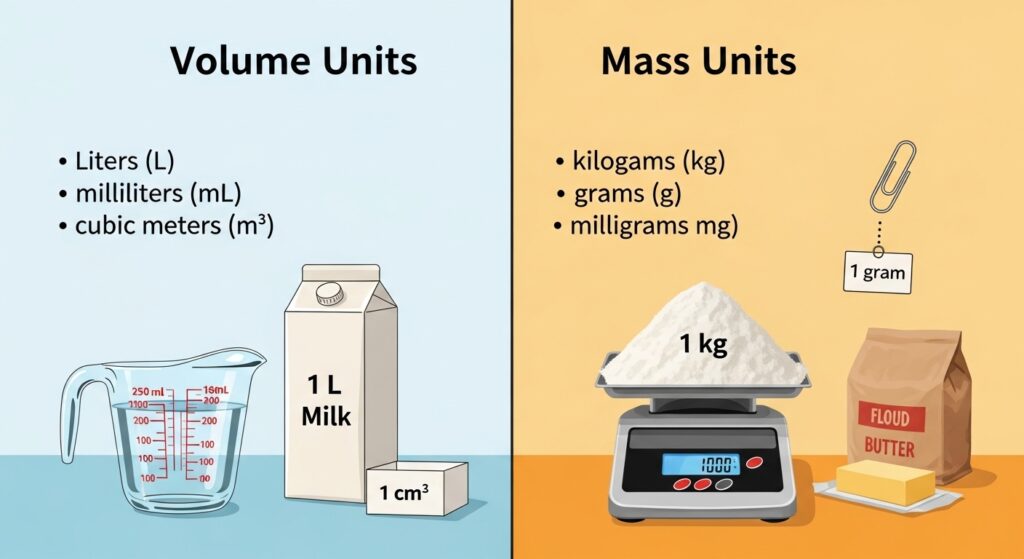
First things first. Milliliter (mL, ml, mℓ, cc) is a unit of volume, plain and simple. It tells you how much space a liquid or fine-grained substance takes up. Gram (g, gramme), on the other hand, measures mass the “stuff” itself, independent of how much space it occupies.
Seems straightforward, right? Except it’s not. One milliliter of water weighs exactly one gram, but swap water for honey, flour, or oil, and suddenly the numbers shift. That’s the sneaky, tricky nature of density (g/mL) at work.
Now, if you’re the type who likes neat formulas, there’s this little gem:
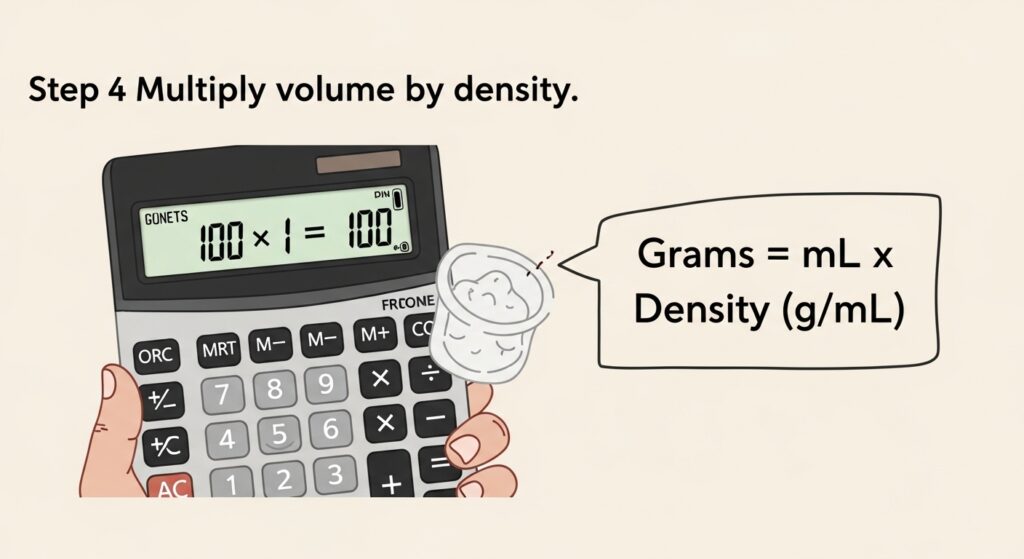
grams = milliliters × density
Simple, but deceptively powerful. It’s your golden ticket to converting liquids, powders, oils basically anything that isn’t a cat or a cloud.
Why a Milliliters to Grams Conversion Calculator is a Game-Changer
Imagine this: you’re baking a chocolate cake for a friend’s birthday. Recipe says “200 mL milk, 100 mL cooking oil, 300 g flour.” But your scale only measures grams, and you don’t know the exact density of the milk you have.
Panic? Nah. Enter the scale / calculator for measurement, a trusty sidekick that bridges volume and mass with precision.
Here’s why it’s more than just convenience:
- Consistency in Cooking and Baking Measurements: Baking is literally a science; a few extra grams of sugar or flour can change texture, rise, and taste.
- Accuracy in Chemical Reactions / Chemistry: Ever tried mixing powdered chemicals or aqueous solutions? Wrong mass-volume stoichiometry and your experiment goes poof or worse.
- Global Standardization: Different countries list ingredients differently; mL vs g confusion is real. A calculator solves this, so your cake in Paris tastes like your cake in Tokyo.
Key Ingredients and Their Conversion Insights
Not all ingredients are equal. This is where your inner nerd gets excited. Water, for instance, is forgiving: 1 mL = 1 g. But when it comes to milk, you might find it’s slightly heavier around 1.03 g/mL because of fats and solids.
Cooking oils? Less dense than water, roughly 0.92 g/mL. Flour and sugar? Now we enter the world of compaction, clumping, and approximation.
Here’s a quick cheat sheet for common kitchen heroes:
- Water: 1 mL = 1 g
- Milk: 1 mL ≈ 1.03 g
- Cooking Oil: 1 mL ≈ 0.92 g
- All-Purpose Flour: 1 mL ≈ 0.53–0.59 g (depends on aeration)
- Granulated Sugar: 1 mL ≈ 0.85 g
Mini anecdote: Joe Sexton, a well-known culinary author, once wrote about measuring flour by volume and ended up with bricks instead of pancakes. True story. That’s why we advocate weight over volume whenever possible.
Step-by-Step Guide: How to Convert mL to Grams
Okay, grab your notebook, this is the part where you feel like a wizard.
- Identify the Ingredient Knowing the substance helps determine density (g/mL).
- Measure the Volume Using mL or L is ideal. Remember, 1 L = 1000 mL.
- Apply the Formula Multiply the volume by the density. Voila, you have grams.
- Check Against a Scale Nothing beats the tactile reassurance of a physical scale / calculator for measurement.
Bonus tip: For dry ingredients, shake or sift lightly before measuring to avoid overestimation. Small variations can lead to big differences in taste or chemical yield.
Common Mistakes and How to Avoid Them
Even seasoned pros mess this up. Here’s what to watch for:
- Assuming 1 mL = 1 g for all substances. Nope. Density varies.
- Ignoring temperature Some liquids expand or contract, subtly affecting volume.
- Neglecting compaction Flours, powders, and granulated sugar can “settle,” giving false readings.
Ethan Dederick, PhD, reviewer at a leading science journal, notes, “Accurate conversions require understanding both the physical properties of the ingredient and the context of the measurement.” Wise words, right?
Fun With Conversion: Beyond the Kitchen
You don’t need to be a chemist or chef to appreciate Milliliters to Grams Conversion. Here are some quirky applications:
- DIY Cosmetics: Making lotions or scrubs requires precise measurements of oils, water, and powdered additives.
- Gardening: Some fertilizers or plant nutrients list instructions in mL but your scale measures g.
- Art Projects: Even resin casting or paint mixing benefits from proper mass-volume stoichiometry.
Basically, this conversion skill is your secret superpower for anything that involves liquid, powder, or chemical… and yes, even some of the messier hobbies.
Tools of the Trade: Scales, Calculators, and Tables

You could do all this manually, but let’s face it, life’s too short for endless multiplication. Tools make your life easier:
- Digital Scales: Fast, accurate, portable. Ideal for cooking and baking measurements.
- Conversion Tables: Great for quick reference especially in chemistry labs.
- Online Calculators: Enter mL, pick your ingredient, get grams instantly. Nifty.
The National Institute of Standards & Technology (NIST) and CK-12 Foundation both provide validated references for densities and conversion factors, ensuring you’re never guesstimating.
How Density Shapes Every Conversion
This might sound nerdy (and it is), but density is the real hero of this story. Consider:
- Water: 1 g/mL
- Honey: ~1.42 g/mL
- Cooking oil: ~0.92 g/mL
Understanding this explains why a cup of honey feels like lead compared to a cup of oil that slips through your fingers. It also shows why the humble milliliter to gram conversion is more nuanced than it seems.
Practical Tips for Home Cooks and Chemists
- Always weigh dry ingredients if recipe precision matters.
- Stir, shake, or aerate powders before measuring volume.
- Adjust for temperature if working with chemicals sensitive to expansion.
- Keep a conversion table handy; your brain will thank you.
- Experiment with liquids that don’t exactly match their nominal densities; note results for next time.
Pro tip: Baking enthusiasts swear by creating their own “density cheatsheets” for favorite ingredients—it saves headaches and weird cakes.
Advanced Conversions and Related Units
Sometimes, you want to convert beyond grams. Here’s a handy guide:
- Milliliters to Teaspoons / Tablespoons / Cups / Pints / Quarts / Gallons Great for traditional recipes.
- Milliliters to Ounces / Pounds / Kilograms Useful if you’re reading international recipes.
- Milliliters to Milligrams Chemistry labs love this for powdered chemicals.
Remember: 1 mL = 1 cm³, and 1 g of water = 1 mL, but other substances shift according to density. The conversion formula is your constant friend.
When Precision Matters: Chemistry and Cooking

Here’s where things get a little fancy. In cooking, a small miscalculation might ruin dessert. In chemistry, the same mistake could produce a failed reaction.
Mass-based measurement is universally more precise because volume can be deceiving. Dry ingredients, powdered chemicals, and viscous liquids behave unpredictably if you only rely on mL.
Mini anecdote: A chemistry professor once joked, “I trust grams, but I fear milliliters,” highlighting why accuracy is king.
How to Make Conversions Personal and Memorable
Here’s a quirky idea: create a personal conversion journal. Track how your favorite ingredients translate from mL to g in your kitchen, at your altitude, using your scale. Over time, you’ll have a tailored cheat sheet that works every time—like a secret recipe decoder.
Also, share your discoveries with friends or online communities. Conversations about Milliliters to Grams Conversion might seem nerdy, but they spark creativity and accuracy, whether in baking, chemistry, or DIY projects.
Frequently Asked Questions
ml to grams
The conversion from milliliters to grams depends on the ingredient’s density; for water, 1 mL equals 1 g.
ml to g
Milliliters can be converted to grams by multiplying the volume by the substance’s density in g/mL.
100 ml to grams
For water, 100 mL equals 100 g; for other ingredients, multiply 100 by their density in g/mL.
ml to gram
To convert milliliters to grams, multiply the milliliter value by the ingredient’s density (grams per milliliter).
how many grams in a ml
The number of grams in 1 mL depends on the substance’s density; for water, it is 1 g.
Read this Blog: https://wittyeche.com/how-long-is-20-feets/
Conclusion: The Beauty of Understanding Mass and Volume
Learning Milliliters to Grams Conversion is like unlocking a hidden language of the universe. You see the relationships between volume, mass, and density, and suddenly recipes, experiments, and even simple DIY projects make so much more sense. You’re no longer guessing; you’re precise, confident, and empowered.
So next time you’re measuring 150 mL of milk or 200 mL of honey, remember: there’s a story behind every gram and every milliliter.
And with a bit of curiosity, a trusty scale / calculator for measurement, and maybe a splash of patience, you’ll master the dance between milliliters and grams one delicious, scientific, and sometimes messy step at a time.