

There was a night, not long ago, when I stared at my phone and saw 20:30 military time blinking back at me like it was daring me to understand it. I’d been texting a cousin who works overseas, and he said, “Let’s talk at 2030.” I blinked twice. 2030?
Was that some futuristic year? A code? A secret handshake of adults who know how to fold fitted sheets properly? Turns out, it was much simpler. And yet, weirdly beautiful in its simplicity.
Time, after all, is more than numbers. It’s dinner simmering at just the right hour. It’s a child asking, “Is it bedtime yet?” It’s a soldier syncing watches before a mission.
And sometimes, it’s just someone trying to figure out if 20:30 military time means morning coffee or evening tea. So let’s unravel it gently, like pulling a thread from a sweater you almost love too much.
| Military Time | 24-Hour Clock | Standard Time (12-Hour Clock) | AM/PM | How to Convert |
|---|---|---|---|---|
| 20:30 | 20:30 | 8:30 PM | PM | Subtract 12 from 20 → 8, keep :30, add PM |
The Simple Answer: What Is 20:30 Military Time?
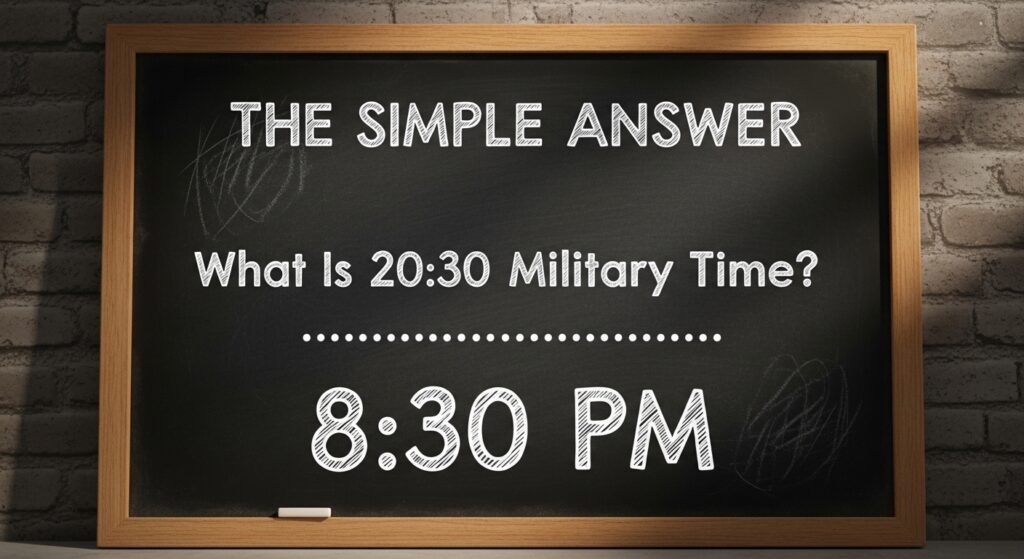
Let’s not overcomplicate it. 20:30 military time equals 8:30 PM in the regular clock most of us grew up with. That’s it. That’s the whole mystery. The evening. After sunset in many places. When the dishes are done, or maybe not done, but at least ignored.
In the world of Military time, also known as the 24-hour clock, the day runs from 00:00 at midnight all the way to 23:59 just before the next midnight. No AM. No PM. No tiny letters squinting at you from the corner. Just numbers, standing tall and unbothered.
So when you see 20:30, you:
• Identify hour part – 20
• Identify minute part – 30
• Recognize that 20 falls within the 13:00 to 23:59 range
• Subtract 12 from hour (20 – 12 = 8)
• Add PM
And voilà. 8:30 PM. The time when the sky is dark and snacks somehow taste better.
Understanding the 24-Hour Clock (Without Falling Asleep)
The 24-hour clock, sometimes called the military clock format, is a timekeeping system that counts the hours of the day from 0 to 23. Instead of starting over after 12, it just keeps going, like someone who refuses to take a break.
Here’s how it flows:
• 00:00 – Midnight (yes, also written as Midnight (24:00 / 00:00) depending on context)
• 01:00 – 1:00 AM
• 08:30 – 8:30 AM
• 12:00 – Noon
• 13:00 – 1:00 PM
• 18:00 – 6 PM in military time
• 20:30 – 8:30 PM
• 23:59 – One minute before midnight
It’s logical, clean, and surprisingly comforting. No guessing. No awkward “Wait, did you mean morning or evening?” conversations. It’s built for avoiding ambiguity and ensuring communication clarity, especially in professions where timing isn’t just polite, it’s critical.
Why Does 20:30 Mean PM and Not AM?
This is where the magic of PM range recognition kicks in. In the 24-hour time format, any hour greater than 12 (from 13 to 23) automatically belongs to the afternoon and evening.
So when you see 20:
• Recognize time ranges
• Apply the hours greater than 12 rule
• Use the Time conversion formula (Hour – 12 = Standard hour)
20 – 12 = 8
And because it’s in that 13:00–23:59 stretch, it’s PM. Evening. Probably when someone’s reheating leftovers and pretending they’re gourmet.
This system exists for one big reason: clear time communication. Imagine a hospital scheduling surgery at 8:30. You really don’t want someone confusing AM vs PM difference in that context.
That’s why Professional use of military time is common in healthcare, aviation, emergency services, and, of course, the military.
Step-by-Step: Convert Military to Standard Time
Let’s walk it slowly, like we’re teaching a friend who insists they’re “bad at math” but actually just had a boring teacher once.
To Convert military to standard time:
• Identify hour part
• Identify minute part
• If hour is 12 or less, it’s AM (except 12:00 which is Noon)
• If hour is greater than 12, subtract 12 from hour
• Add PM
Example with 2030 military time:
• Hour: 20
• Minutes: 30
• 20 is greater than 12
• Subtract 12 from hour (20 – 12 = 8)
• Add PM
Result: 8:30 PM
That’s the entire Time calculation method. No secret handshake required.
Converting the Other Way: 8:30 PM to Military Time
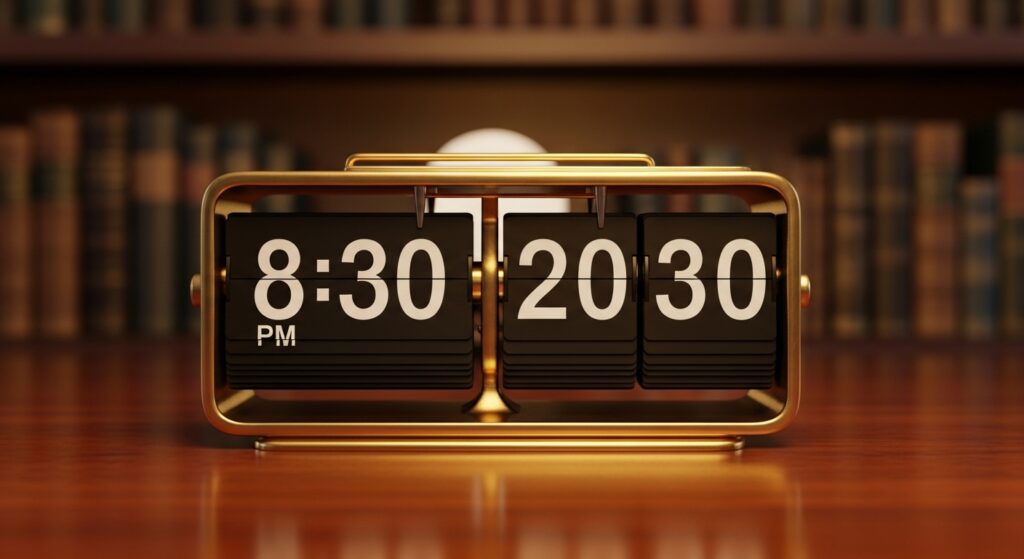
Now suppose someone says, “Dinner’s at 8:30 PM,” and you want to write it in Military time.
To Convert standard to military time:
• Keep the minutes the same
• If it’s PM (and not 12 PM), add 12 to the hour
8 + 12 = 20
So 8:30 PM becomes 20:30.
And 8:30 AM? That’s simply 08:30 in military format. Notice the leading zero. It’s tidy. Organized. Almost smug.
This is how the Time format conversion works, whether you’re dealing with 1500 military time (which equals 3:00 PM) or wondering about 6 PM in military time (that’s 18:00).
What Is Military Time, Really?
So, what is military time?
It’s a time representation system built on the 24-hour time format. Instead of splitting the day into two 12-hour chunks with AM/PM notation, it counts straight through from midnight to midnight.
It’s used widely beyond the armed forces:
• Hospitals
• Airlines
• Railways
• International businesses
• Organizations like Brighterly, where structured learning often benefits from precise scheduling
According to educational contributors like Marvi M. Andres, an Author who has written about foundational math literacy, understanding the Standard clock format alongside the military version helps children grasp broader numerical patterns.
Meanwhile, Franz Jerby Delos Santos, a Reviewer, notes that students often struggle not with the math, but with the idea of switching systems.
And Maila Caliao, a Math Tutor at Brighterly, once shared in a webinar (dated October 31, 2025) that “when children understand why we subtract 12 from hours, the fear of time conversion kinda melts away.”
It’s not about memorizing. It’s about pattern recognition. And a bit of confidence.
Midnight Mysteries: Is It 24:00 or 00:00?
Ah, the drama of midnight.
In the 24-hour clock, midnight is written as 00:00 at the start of a new day. Sometimes, especially in timetables, you’ll see 24:00 to indicate the end of a day. Both refer to Midnight (24:00 / 00:00), but context matters.
For example:
• A store open until 24:00 closes at the very end of the day
• A train departing at 00:00 leaves at the very start of the new day
It’s subtle. Slightly poetic, even. Like the difference between “goodnight” and “good morning” when you haven’t slept yet.
Avoiding Time Confusion in Real Life
Imagine this scenario. A friend messages: “Let’s meet at 8:30.” You show up at sunrise. They show up after dinner. Chaos. Mild resentment. Maybe hunger.
This is why Professional time communication matters. The Military clock format removes the guesswork. It strengthens scheduling accuracy and reduces errors in high-stakes environments.
Think of:
• Pilots coordinating flights
• Doctors timing medication doses
• Emergency responders logging events
• International teams working across time zones
The Time notation standards exist so no one has to ask, “Wait, AM or PM?” And honestly, that’s kinda comforting.
Read this Blog: https://wittyeche.com/what-is-1-3-4-to-decimal/
Frequently Asked Questions About 20:30 Military Time
Does 20:30 mean AM or PM?
It means PM. Specifically, 8:30 PM. Any time between 13:00 to 23:59 is afternoon or evening.
How to write 8:30 AM in military time?
That would be 08:30. Morning hours from 1:00 AM to 9:59 AM use a leading zero in military format.
Why is military time used?
To ensure clear time communication, prevent misunderstandings, and standardize global scheduling. It’s about precision. And sometimes, peace of mind.
Is midnight 24:00 or 00:00?
Both can be correct, depending on context, but 00:00 typically marks the start of a new day in the 24-hour time format.
A Small Reflection on Time Itself
There’s something oddly grounding about understanding something as simple as 20:30 military time. It reminds us that systems, even strict-looking ones like the Military time structure, are just tools. They’re here to help us meet each other at the right moment.
At 8:30 PM, someone is reading a bedtime story. Somewhere else, a nurse is beginning a shift. In another corner of the world, a student is converting 1500 military time for homework and realizing it’s just 3 PM, not some alien code.
Time isn’t cold. It’s not mechanical. It’s deeply human. We just dress it in different formats.
How to Master Time Conversion Without Stress
If you want to get comfortable with Convert 24-hour to 12-hour format and vice versa, here’s a gentle approach:
• Memorize anchor points (00:00, 12:00, 13:00, 18:00, 23:59)
• Practice subtracting 12 from hours greater than 12
• Write out a small Military time chart for quick reference
• Compare Morning vs evening time notation daily
And most importantly, don’t rush it. The brain likes patterns. Give it a minute, it’ll catch on.
You don’t need to be a mathematician. You just need to remember one small rule: if it’s bigger than 12, subtract 12. That’s the heart of the PM time conversion.
The Final Word on 20:30
So, what is 20:30 military time?
It’s 8:30 PM. It’s evening. It’s the quiet hum after a long day. It’s proof that numbers don’t have to be intimidating; they just need translation.
Understanding the Time conversion steps, the AM vs PM difference, and the logic behind the 24-hour clock gives you more than knowledge. It gives you confidence. The kind that lets you glance at 2030 and smile instead of squint.
And honestly, that’s enough.
If you’ve ever had a funny mix-up with military time, or if you’re teaching someone how to read it for the first time, share the story. Time is universal, sure. But the way we experience it? That’s wildly personal.